
The Shepherd Mayfair arrives at a moment when London luxury hospitality is shifting away from scale and toward specificity. New boutique openings increasingly compete through neighbourhood identity, design authorship and layered storytelling rather than size alone. Opening in summer 2026 as part of Elegant Hotels Of The World, the 82-room property places itself directly inside Shepherd Market, one of Mayfair’s most historically dense enclaves, on the former site of the Park Lane Mews Hotel.
Shepherd Market Has Become Part of the Luxury Proposition
The hotel’s strongest decision may be geographic rather than architectural. Shepherd Market has long operated differently from wider Mayfair: smaller streets, townhouse scale and a village-like atmosphere embedded within one of London’s most expensive postcodes. The Shepherd Mayfair leans directly into that distinction by positioning itself as a gateway into the area rather than simply another Mayfair address.
That reflects a wider behavioural shift in luxury travel. Travellers increasingly want hotels tied to recognisable local identity instead of interchangeable luxury markers. The property’s discreet entrance on Stanhope Row reinforces that approach. According to the project team, the architectural concept draws from the eighteenth and early nineteenth-century mansions historically associated with Mayfair while preserving the character of Shepherd Market itself.
Boutique Hotels Are Moving Toward Narrative Design
The Shepherd Mayfair places unusual emphasis on storytelling through detail. That approach appears throughout the interiors, overseen by Timothy Shepherd, first through Buckley Gray Yeoman and later through his own practice, Shepherd&.
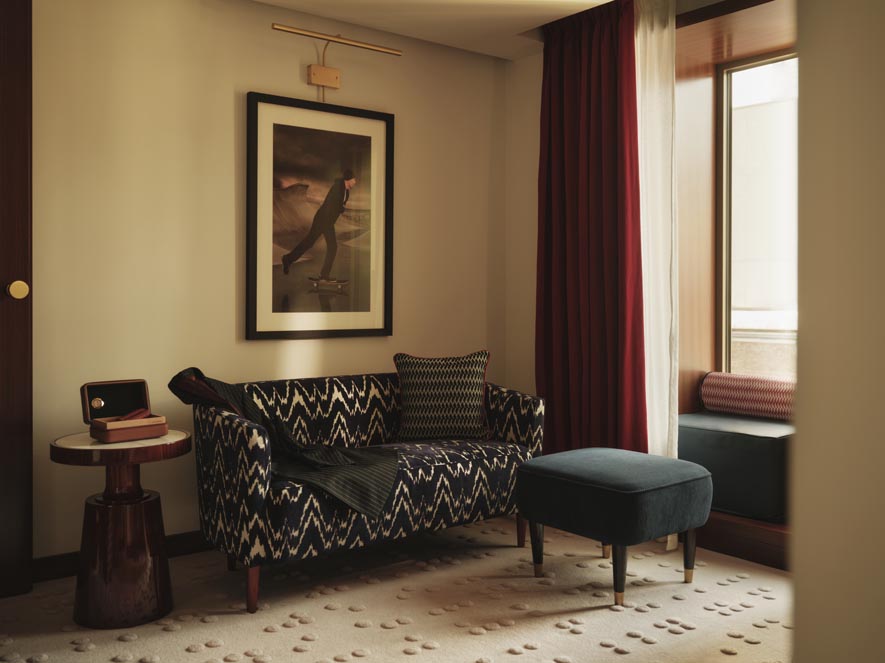
Braille and morse code references woven into the interiors nod to the area’s wartime intelligence history and nearby Down Street station. Local figures including Desmond Sautter and Lord Sandwich appear as recurring references throughout the hotel. These are not decorative flourishes added after the fact; they form part of the hotel’s core design language.
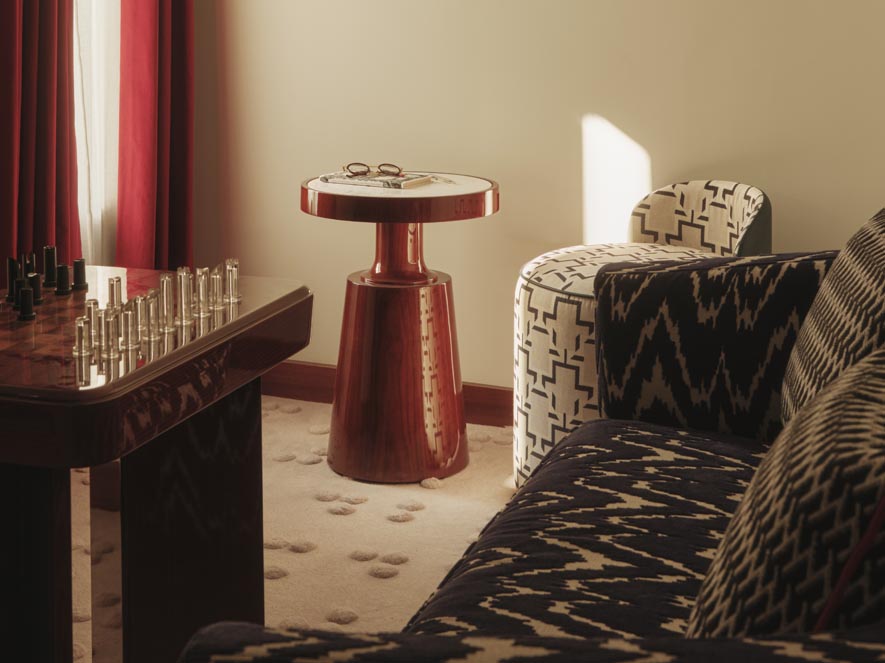
That detail-driven approach aligns with another visible shift in luxury hospitality. Hotels increasingly design spaces around discovery and interaction rather than static visual impact. At The Shepherd Mayfair, desks convert into dressing tables, console tables transform into chessboards and rooms are individually configured instead of standardised.
The Room Design Prioritises Residential Behaviour
The hotel comprises 82 rooms and suites arranged across six floors, ranging from Standard and Superior Rooms to larger Shepherd Suites and Mayfair Suites, with rates starting from £500 per night. Many include window seats overlooking Shepherd Market, reinforcing the connection between the hotel and the streets below.
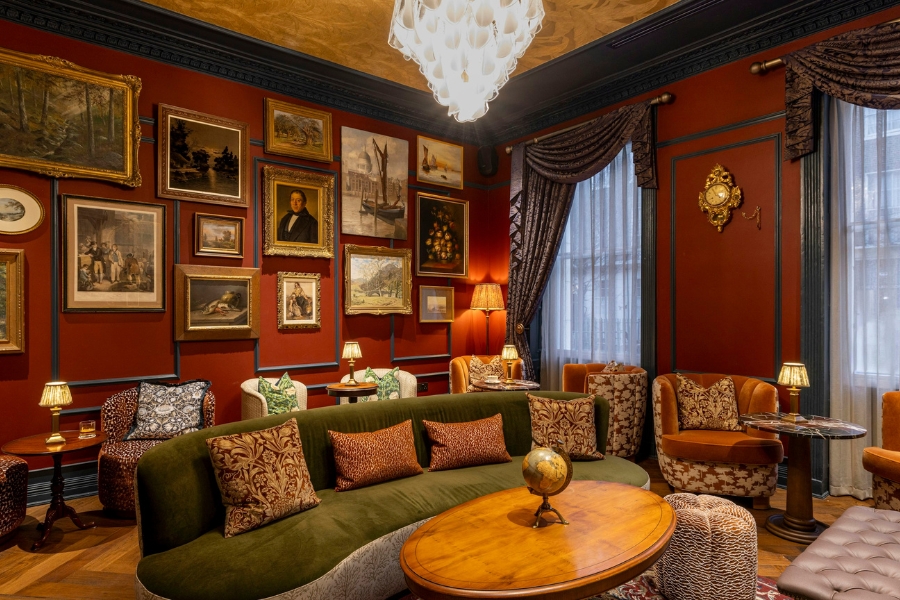
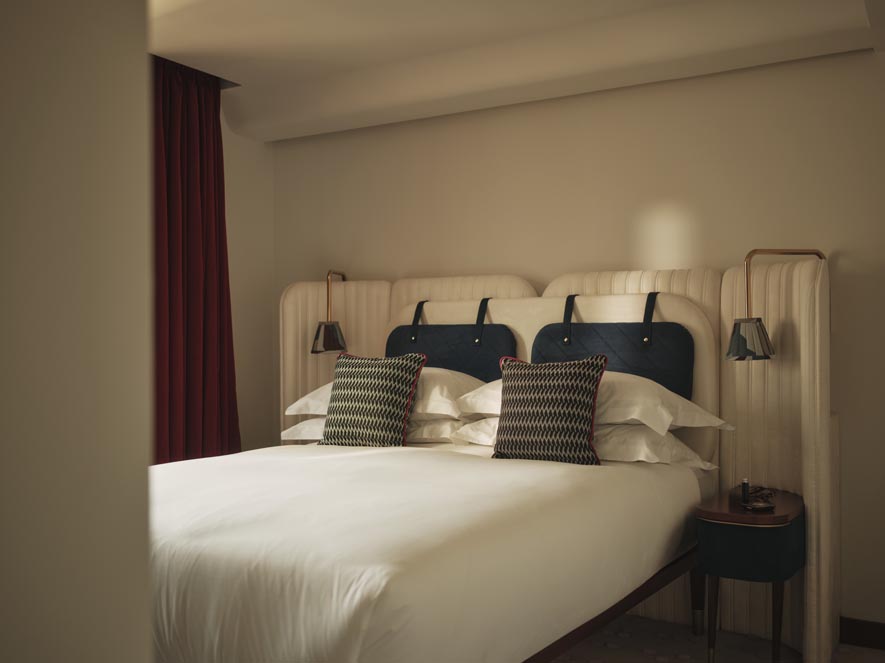
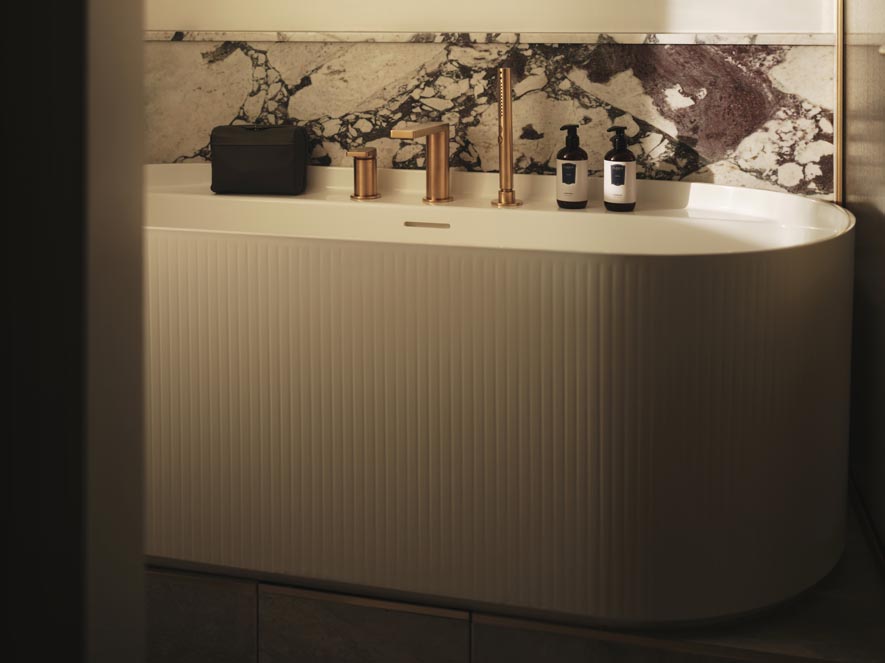
The interiors avoid the darker palettes and heavy theatricality that have dominated parts of London luxury hospitality in recent years. Instead, warm timber finishes, lighter tonal palettes, curved upholstery, blue detailing and red velvet curtains create a more residential atmosphere. Bathrooms are finished in marble and stocked with bespoke Floris amenities produced exclusively for the hotel. Selected rooms also include baths and separate seating areas.
The design strategy suggests another emerging preference among affluent travellers: privacy and domestic comfort increasingly hold more value than overt display. The hotel repeatedly frames luxury through functionality and proportion rather than spectacle.
Food and Beverage Defines the Social Identity
The Shepherd Mayfair launches with three distinct food and beverage concepts, each designed around different patterns of use. Fayre, the ground-floor British brasserie, focuses on all-day dining and seasonal produce. The Lounge operates as a café-style space with artisan coffee, pastries, light lunches and takeaway service. Teddy’s, located below ground, functions as a late-night cocktail bar accessed through a discreet entrance on Market Mews, a separate lift or a hidden staircase.
This layered approach reflects how boutique hotels increasingly build social relevance. Hospitality spaces are no longer designed exclusively for overnight guests. They now function simultaneously as local meeting places, late-night venues and neighbourhood extensions.
What The Shepherd Mayfair Represents
The Shepherd Mayfair enters London at a point when boutique hospitality is becoming more editorial in its thinking: stronger neighbourhood integration, tighter narrative control and more deliberate design authorship.
Its opening is significant less because of size and more because of precision. Every major element of the project, from the architecture to Teddy’s hidden entrance, is designed to reinforce one idea: that contemporary luxury travellers increasingly want hotels with identifiable point of view, local context and behavioural texture.