
Six London hotels made The Times’ 2026 list of the 50 Best Places to Stay in the UK. Bertrand’s Townhouse, one of them, sits inside a Georgian building at 4-6 Bedford Place in Bloomsbury. In fact, it reached that list in its first year of trading, without a hotel group’s marketing budget behind it.
Elite Traveler, Condé Nast Traveler, Business Traveller and Sleeper all wrote about the opening within the same year. So did the London Standard and The Gloss Magazine. Most hotels wait years for that kind of attention, if they ever get it at all. Instead, Bertrand’s had it before its first birthday.
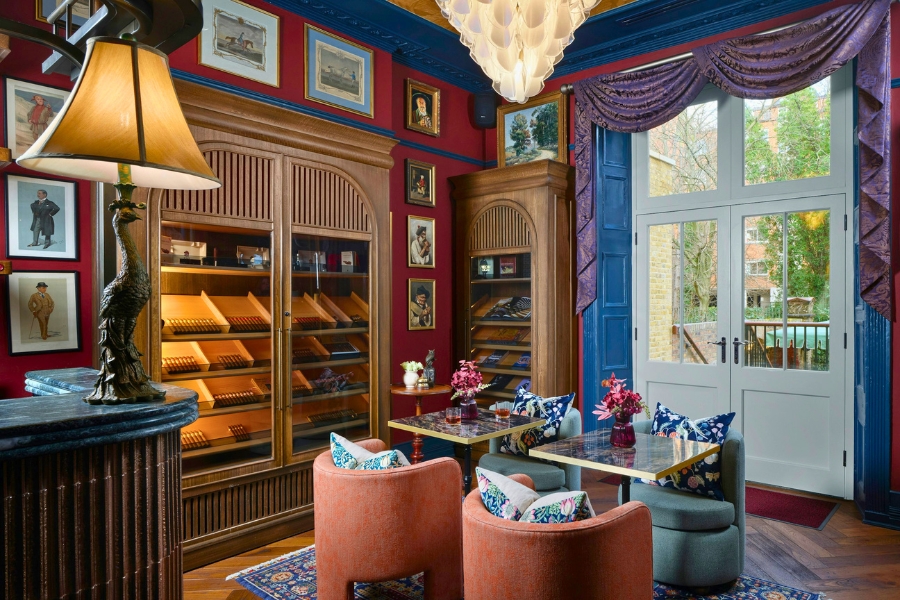
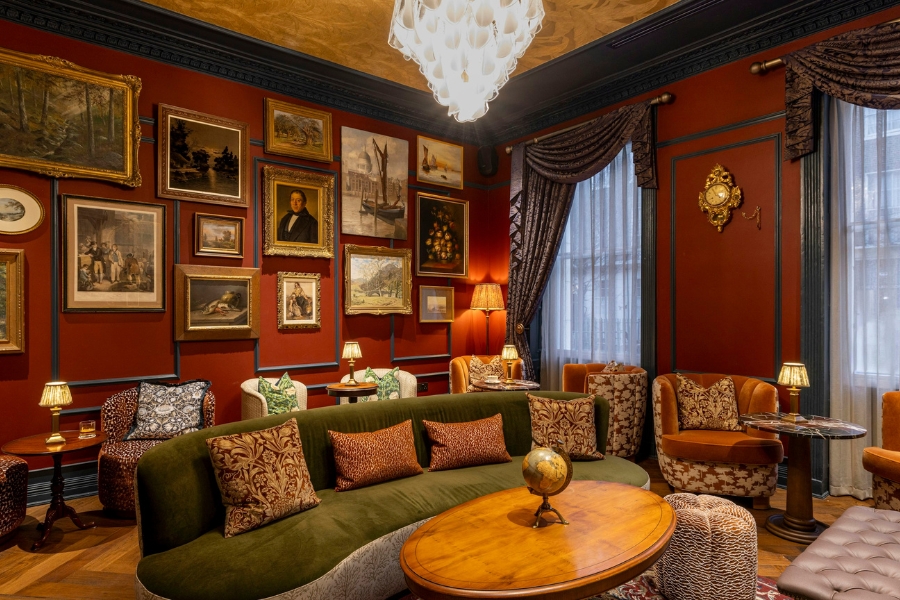
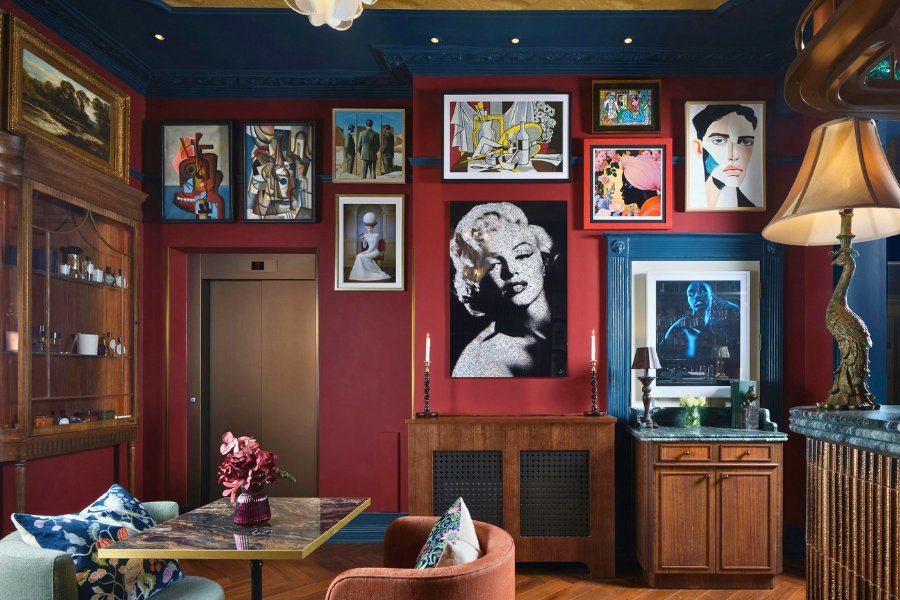
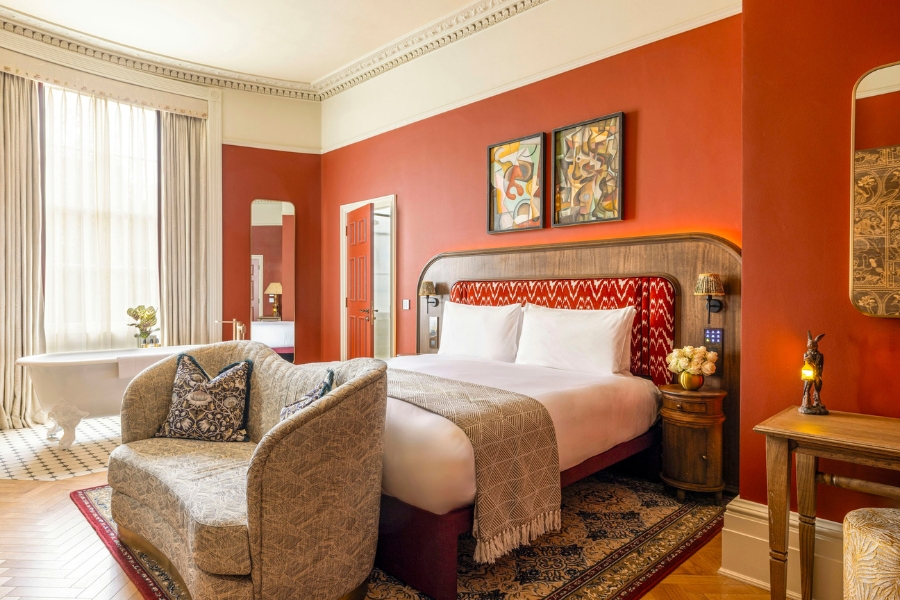
The identity of the hotel runs from Bertrand Russell straight through to the furniture. His letters and lines cover the walls throughout the building. One greets guests right at the entrance: “the time you enjoy wasting is not wasted time.” Indeed, the hotel’s own history page traces the building back to the Bloomsbury Set. This circle of writers and thinkers once gathered on these same streets and squares. Bertrand’s calls its guestrooms Quarters. Several carry dark red walls, dark wood furniture and stacked historic books, as if a guest left mid-chapter. Ottie’s Salon, the ground-floor bar, pairs burgundy and blue walls with gold accents. An ornate clock, orange tub chairs and a cigar cabinet fill one corner. A large green sofa anchors the center, ideal for conversation.
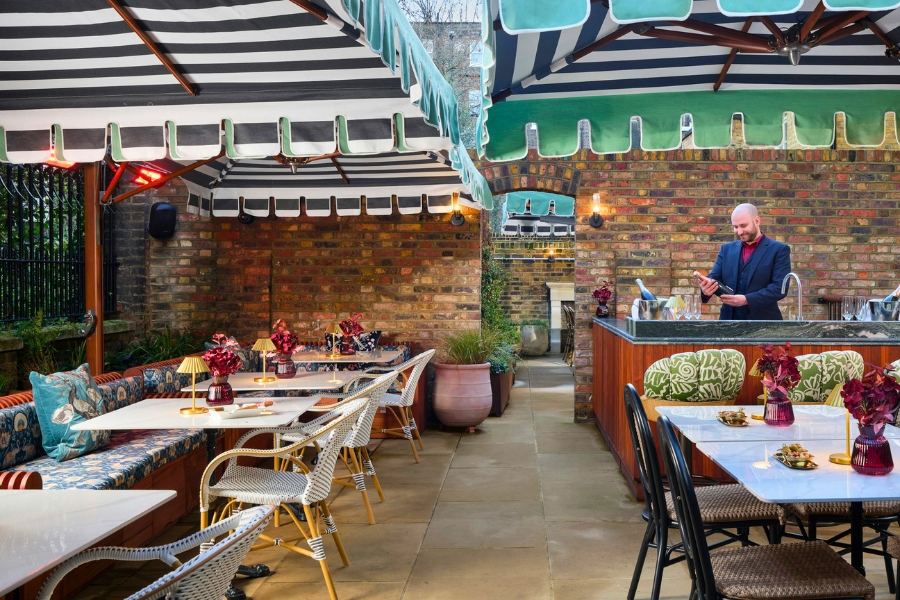
Meanwhile, the same idea continues outside, in the Cigar Garden. It is a small, leafy terrace for fine wine and hand-rolled cigars, just behind the building. Jazz Nights fill it a few evenings a week. The terrace sits a five-minute walk from the British Museum. It’s on a residential square so quiet that guests mention it by name in their reviews.
None of this decor happened by accident, either. Few Georgian townhouses this size remain intact in central London. Mayfair and Belgravia lost most of theirs to embassies and institutional use decades ago. Those buildings became offices, and the changes erased their original room proportions. Bloomsbury’s terraces, however, avoided that fate. Turning six of them into a single hotel meant restoring rooms designed two centuries ago for Georgian family life. The team then furnished them with a cigar cabinet, a green sofa and historic books that suit that scale.
That combination is hard to find elsewhere: a Georgian house that survived intact, a single historical figure worked into every wall and room name, and national recognition inside the first year of opening. Very few properties in central London can claim all three. Reviews collected under “Letters to Bertie” repeatedly mention the decor, the quiet street outside, and staff who remember guests after one stay. Bertrand’s built the hotel around earning exactly that response.