

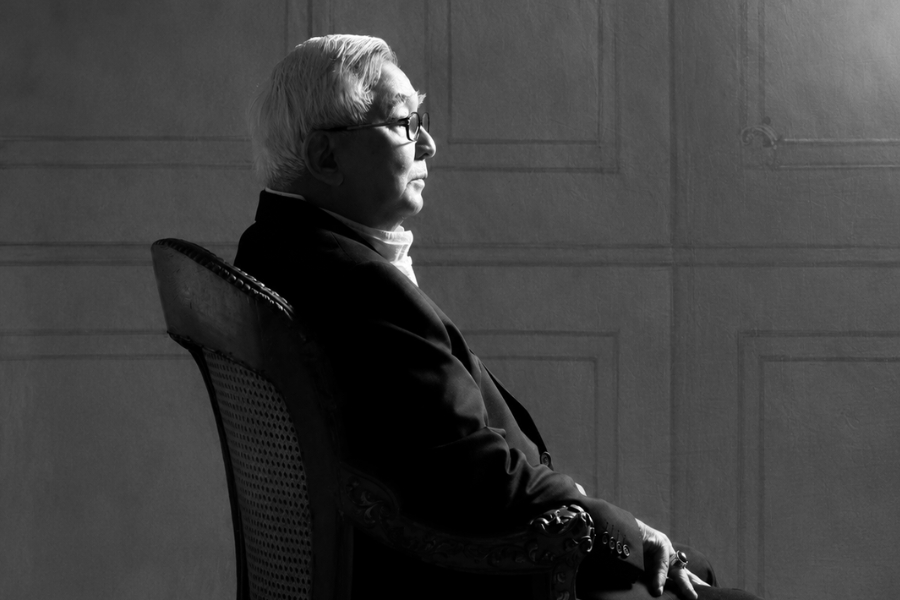
Our editorial series, Powered by Pioneers, invites you behind the scenes of Elegant Hotels of the World. Here you meet the people and personalities passionately crafting unique and authentic guest experiences in distinctive locations around the world. Together, their stories reveal a more meaningful kind of luxury. Independent hotels shine here as expressions of character, culture, purpose and progress. In this edition, we explore the legacy of Hendra Hadiprana: architect, collector and patron behind Tanah Gajah in Ubud, Bali. Known affectionately as Om Henk, Hadiprana helped shape Indonesia’s modern art story through Galeri Hadiprana, the country’s first art gallery. He then created a private Balinese estate where architecture, painting, family and hospitality became inseparable.
It All Started With Art
Before Indonesian art had a market, Hendra Hadiprana was already knocking on studio doors. From Jakarta, he travelled to Bandung, Yogyakarta and Bali, meeting painters in their homes and studying their discipline. He was looking for ideas that could survive beyond a single canvas. The habit began after his return from Groningen in 1958. A painting exhibition at Des Indes Hotel on Gajah Mada Road in Jakarta showed him something important. It was a country building its visual language with little institutional support. Hadiprana trained as an architect at Akademie Minerva. He recognised the work before the wider world had decided how to value it. That instinct became Galeri Hadiprana, founded in 1962 and widely regarded as Indonesia’s first art gallery. His wife, Jennewati, helped shape it from the beginning. Together they turned the gallery into a meeting place for artists, diplomats, collectors and intellectuals.
President Sukarno visited and later invited Hadiprana to the Presidential Palace. There, he encouraged Hadiprana to run the gallery according to his own taste. The advice suited him because personal judgement had always been the point: he collected through relationship, not fashion. Hadiprana’s reputation was built through attention, which is harder to fake than taste. He looked at an artist’s concept, stamina, living conditions and capacity to grow before he looked at acquisition. Visual Arts magazine later ranked him among the hundred greatest Indonesian art collectors of the 1957 to 2007 period. The painter Danarto gave a cleaner measure of his influence. Danarto noted that Hadiprana helped artists financially while also giving them opportunities to develop. That distinction matters because it places him closer to patron than collector.
Building Tanah Gajah
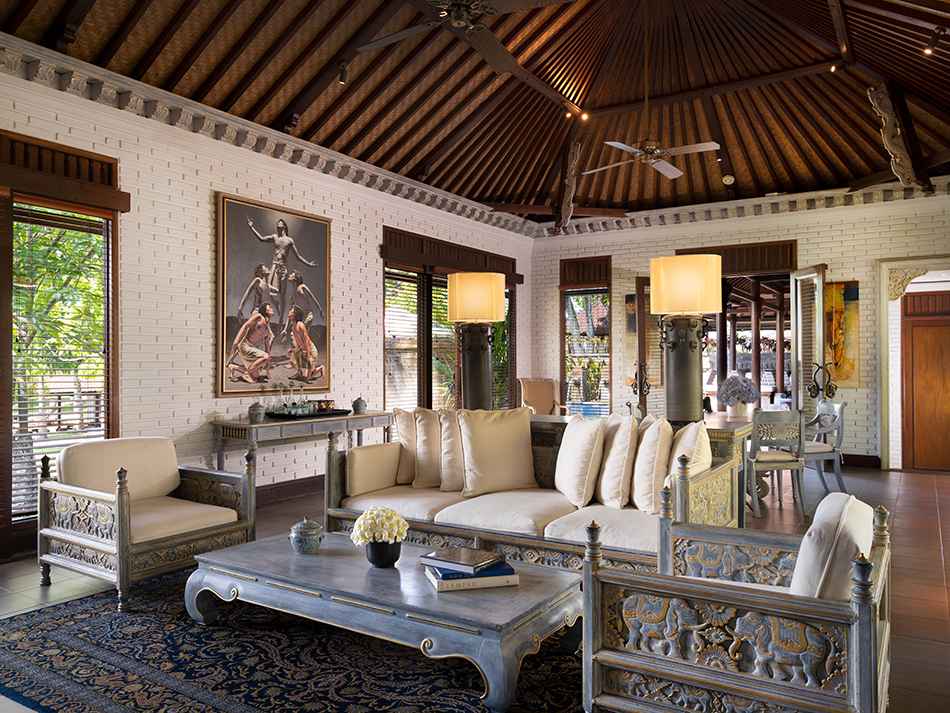
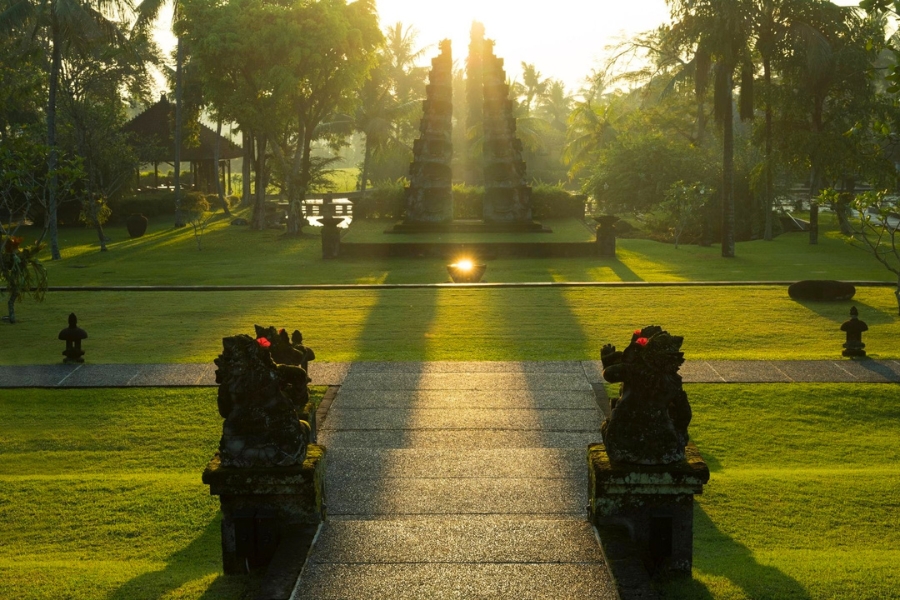
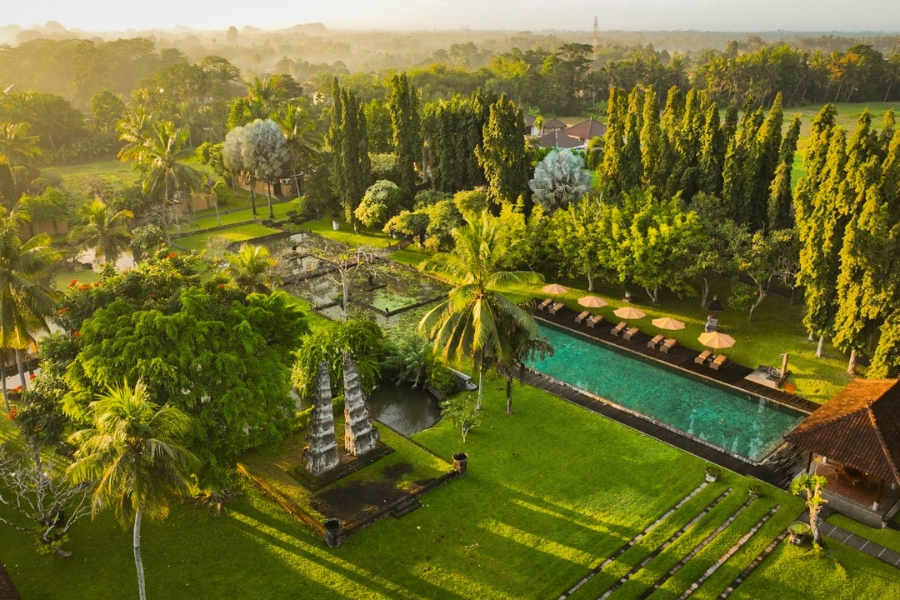
Tanah Gajah in Ubud began with the same discipline of looking. Hadiprana first saw the land near Goa Gajah, the Elephant Cave, during a lunch in the early 1960s. He then spent around twenty years buying the rice fields piece by piece. In 1984, he built a private family estate across six hectares. He filled it with works gathered through decades of travel across the Indonesian archipelago. The art did not arrive to finish a room. It arrived with names, conversations and memory attached. The villas carry the most intimate evidence. Hadiprana named them after members of his family, placing private relationships into the architecture. Guests were given more than a room allocation; they entered a space carrying a name from the Hadiprana household.
The Family Returns
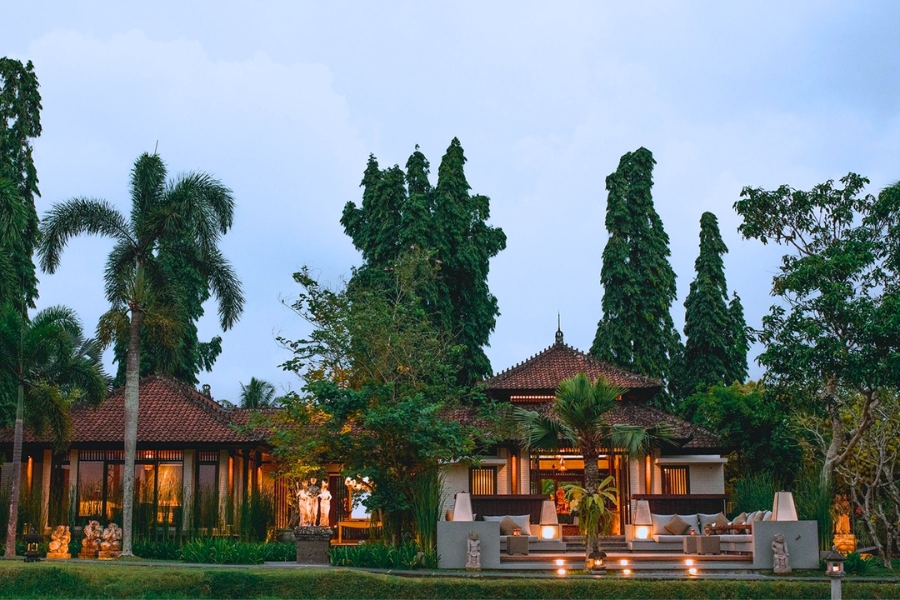
That household did not step away from Tanah Gajah so much as pause. In 2004, Hadiprana handed day-to-day management to an overseas hotel operator, and the property spent the next fifteen years trading as The Chedi Club Tanah Gajah Ubud. Hadiprana passed away in December 2018, at 89. His daughter, Puri Hadiprana, and his granddaughter, Sekaraya Hadiprana Surjaudaja, began working toward a return soon after. On 1 January 2020, the estate came back under family control as Tanah Gajah, a Resort by Hadiprana. The original villa names went back on the doors as part of that handover. It restored an authorship that outside management, however successful, had never carried.
The return also settled who would carry which part of Hadiprana’s work forward. Puri now leads Hadiprana Hospitality. She also manages Tanah Gajah’s art gallery and arts centre, the same ground her father built his name on. Sekaraya serves as brand ambassador across the family’s hospitality ventures and oversees the resort’s branding and retail side. Deasy Swandarini completes the leadership team as Chief Operating Officer, running operations across the wider Hadiprana Hospitality portfolio. Between them, the family’s flagship business is entirely women-led, a continuation of Hadiprana’s own instinct for backing overlooked talent, now expressed as leadership rather than patronage. Of the years under outside management, Sekaraya summed it up simply: it had been “a terrific run.” The line reads less like closing a chapter than opening one on the family’s own terms.
A Legacy Still Being Written
What has followed looks less like caretaking and more like continuation. In 2025, Tanah Gajah added a set of Premier One Bedroom Club Pool Villas. Their sculptures and interior details came from Hadiprana Artwork, the family’s own design practice. It extended Hendra’s visual language into rooms he never built himself. Hadiprana Hospitality has since grown past Tanah Gajah as well. It has added Rumah Prapanca in South Jakarta and Dua Dari in Bali. A fourth property, Bandarindu, is due in late 2026, on the site of the family’s first Bali holiday home. It gives Tanah Gajah something many heritage hotels struggle to protect: authorship that can still be read at room level. The family is still adding rooms to that story.
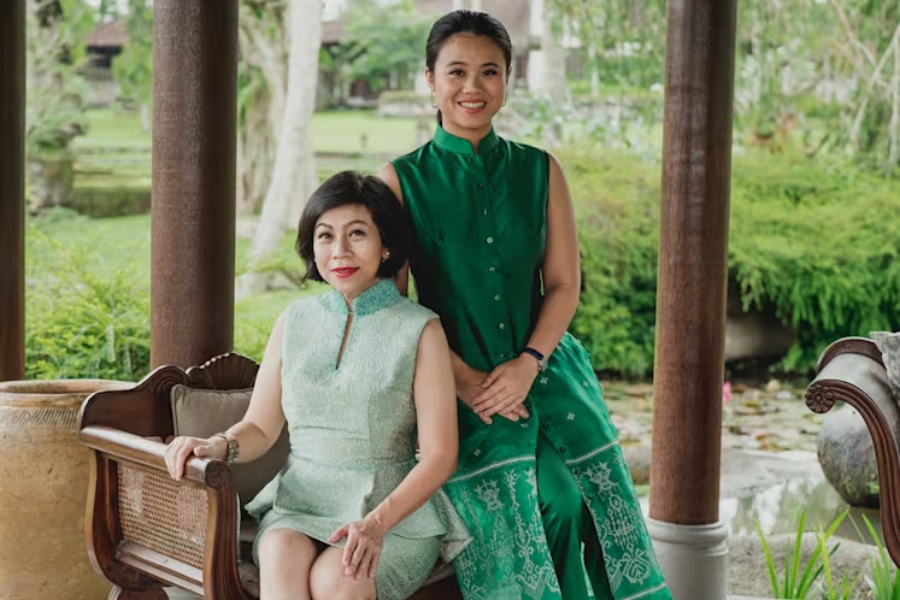
Hadiprana’s legacy is not only that he built a gallery, collected art or created a Balinese retreat. It is that he changed the conditions around Indonesian creativity by taking artists seriously before the market rewarded that attention. Tanah Gajah remains compelling because its hospitality comes from that same act of belief. It is one his daughter and granddaughter chose to reclaim for themselves, now carried forward by a leadership team of women across the business. The hotel did not invent a story for guests. It opened the one Hadiprana had already built, and his family, led by his daughter and granddaughter, are still the ones telling it.