
A man who grew up beside Getsemaní’s Plaza de la Santísima Trinidad once described the square as his childhood living room. By evening, people still gather outside the church to eat, talk and meet friends. Travellers come too, often on their way to the bars nearby. It is an unusually good place to begin understanding a night out in Cartagena: the square had regulars long before it had an audience.
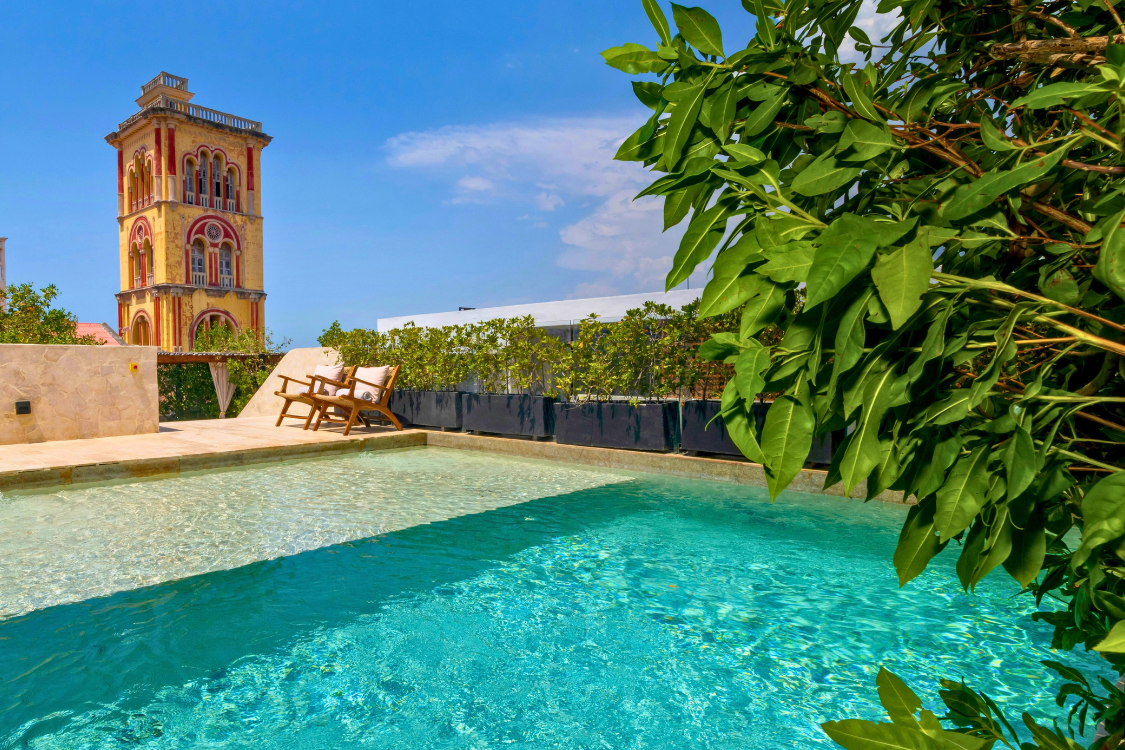
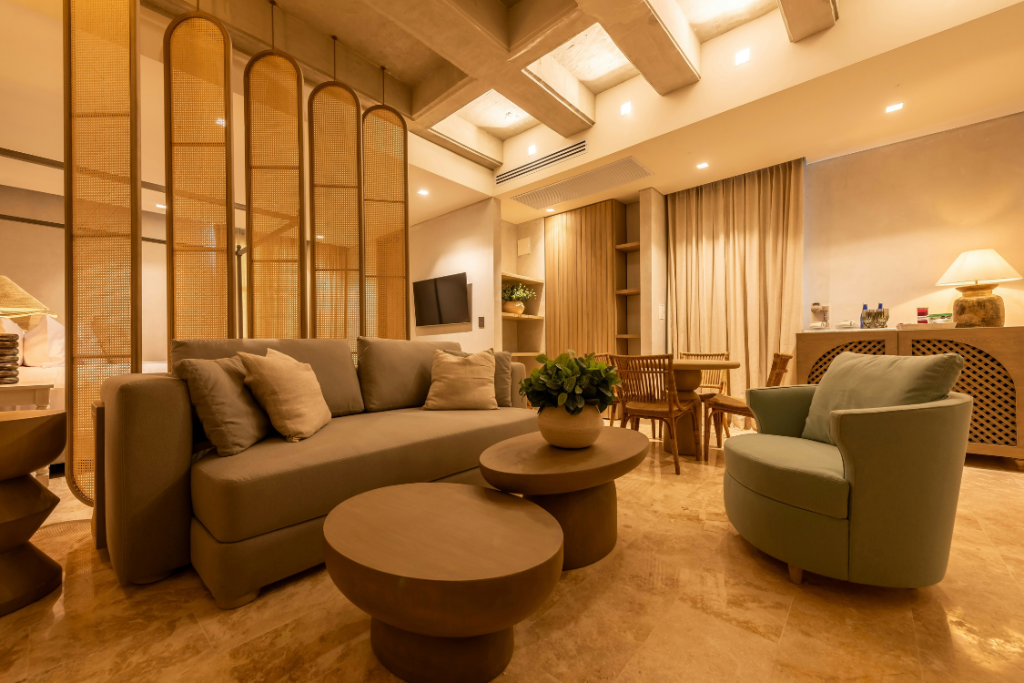
Across the old walls, Cinco Quintas Boutique Hotel occupies a restored house on Calle del Porvenir. The hotel received its first MICHELIN Key in the 2026 selection. Its rooftop has two pools, a bar and a view towards the cathedral and the Universidad de Cartagena’s tower. Apogeo serves dinner, and on weekends a DJ plays. The roof has all the ingredients for a complete evening, although the hotel’s central address makes it just as useful for a late return.
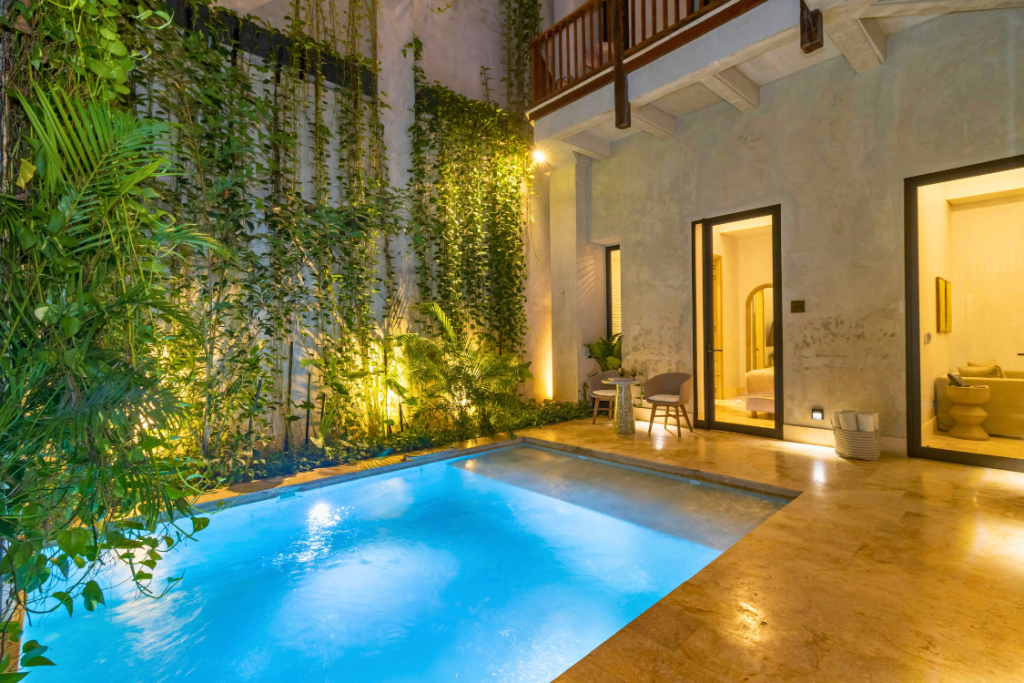
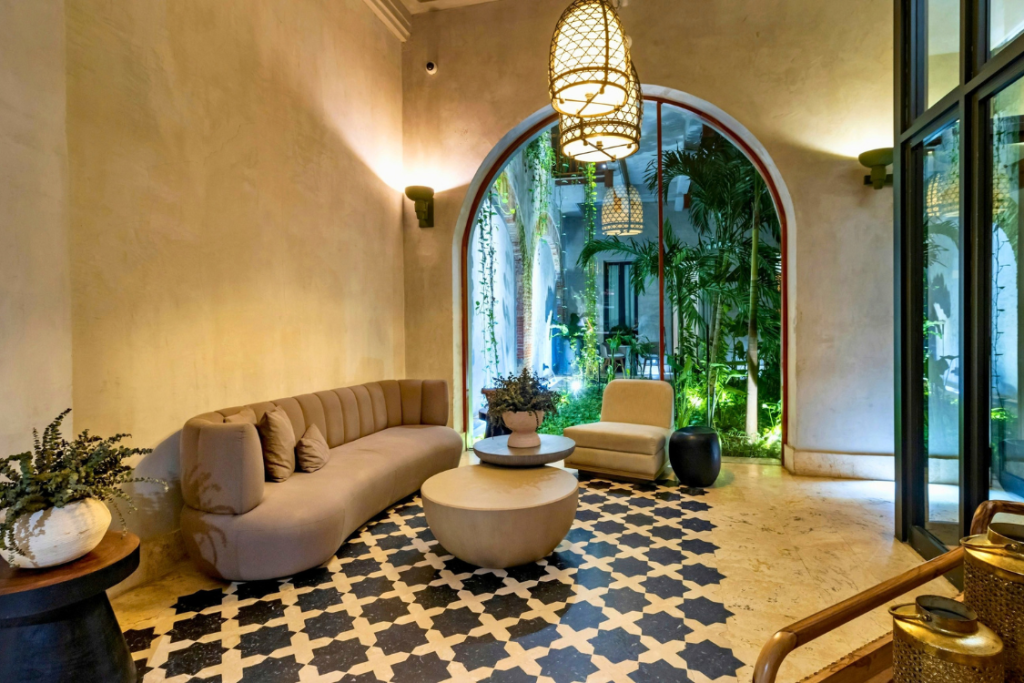
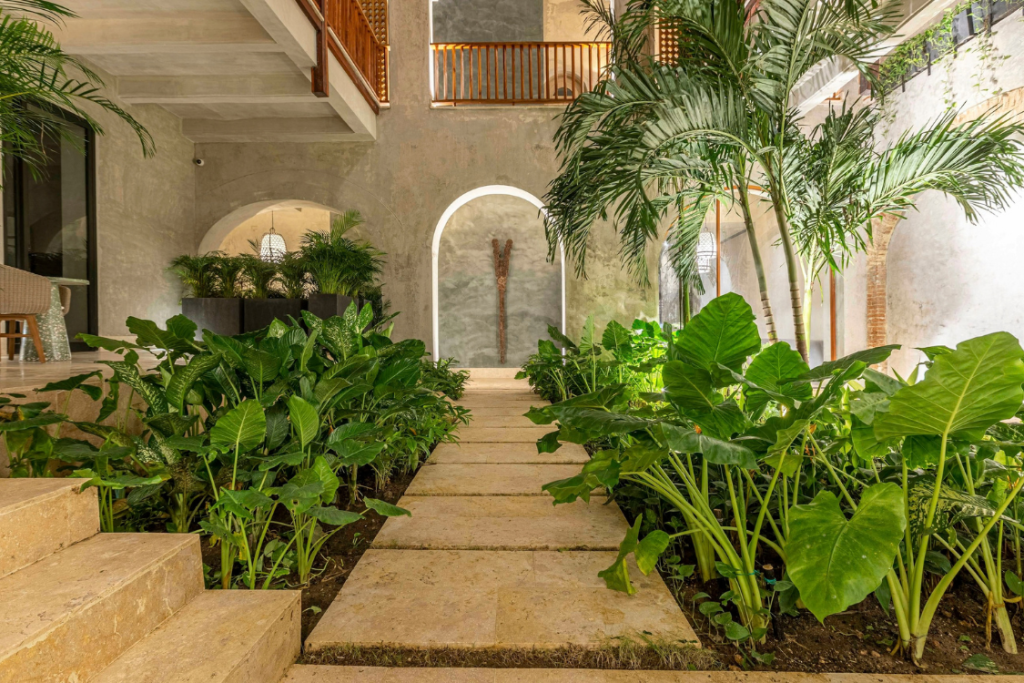
The house itself offers a quieter version of Cartagena’s old centre. A tropical garden sits inside; upstairs, the city’s landmarks are visible from the pool. There is pleasure in having both, especially if the evening begins with dinner at Apogeo and carries on elsewhere. Cartagena rewards that sort of loose arrangement. A table deserves booking; the hour after dinner can take care of itself.
After the table
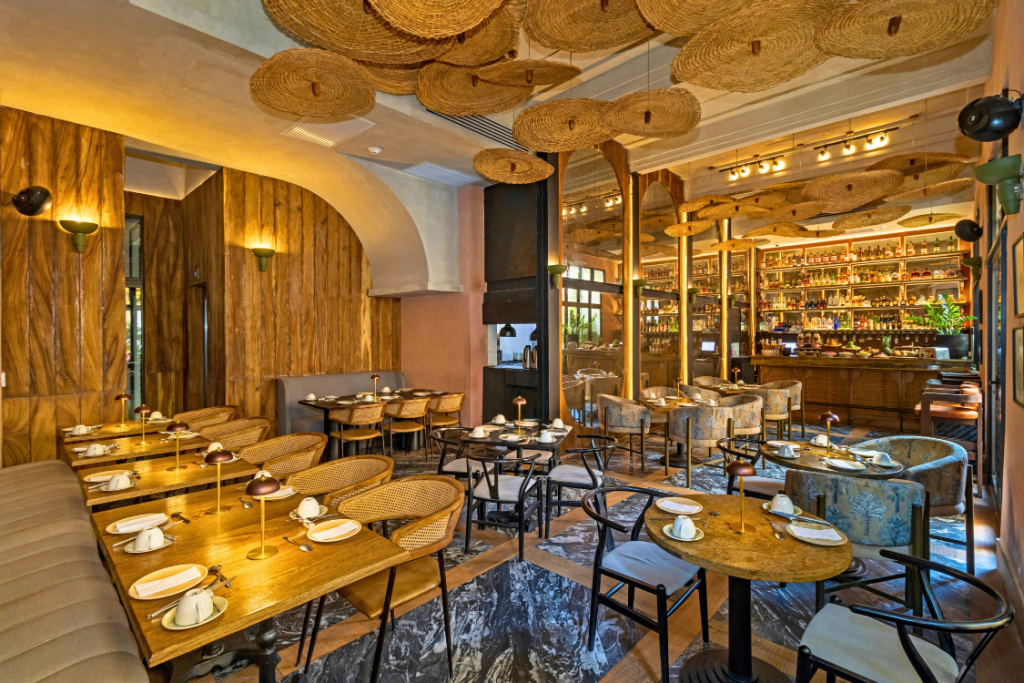
Before Getsemaní’s bars, there is the question of dinner. Carmen serves Colombian ingredients in a historic house with a courtyard and roof terrace. In Getsemaní, La Cocina de Pepina grew from María Josefina Yances Guerra’s commitment to traditional Caribbean cooking. The restaurants make different cases for an evening out, and either is reason enough to take dinner seriously before choosing a bar.
From Plaza de la Santísima Trinidad, Café Havana is close by on Calle de la Media Luna. It still hosts live salsa, and a band offers the satisfying certainty of somewhere to spend several hours. The square requires less commitment. People sit, eat and talk around the church; visitors join them. Getsemaní has changed as its restaurants and bars have drawn more attention, but an evening there need not consist of moving between venues.
A sound of Cartagena’s own
Salsa has a prominent place in the city’s bars. Champeta belongs to another history, shaped by Afro-Colombian communities and records brought from Africa and the Antilles. Its picós are vast mobile sound systems that carried music through neighbourhood parties. Colombia’s tourism board describes Rey de Rocha as one of Cartagena’s important picós; its name belongs to a particular sound system and the people who made it known.
Champeta is now heard beyond the neighbourhoods in which it developed. That reach makes its origins more interesting, not less. Someone who knows Cartagena only through its colonial buildings, dinner terraces and salsa bars has heard a small part of the city. A night with champeta leaves room for its musicians and audiences in the picture.
Cinco Quintas is well placed for all of this. Its roof gives the cathedral the attention it deserves, while Calle del Porvenir puts the guest back among the Old City’s restaurants when it is time to leave. Getsemaní’s square and music offer reasons to stay out longer. The next morning, the pool is still upstairs.